What Is Deep Infiltrating Endometriosis (DIE)?
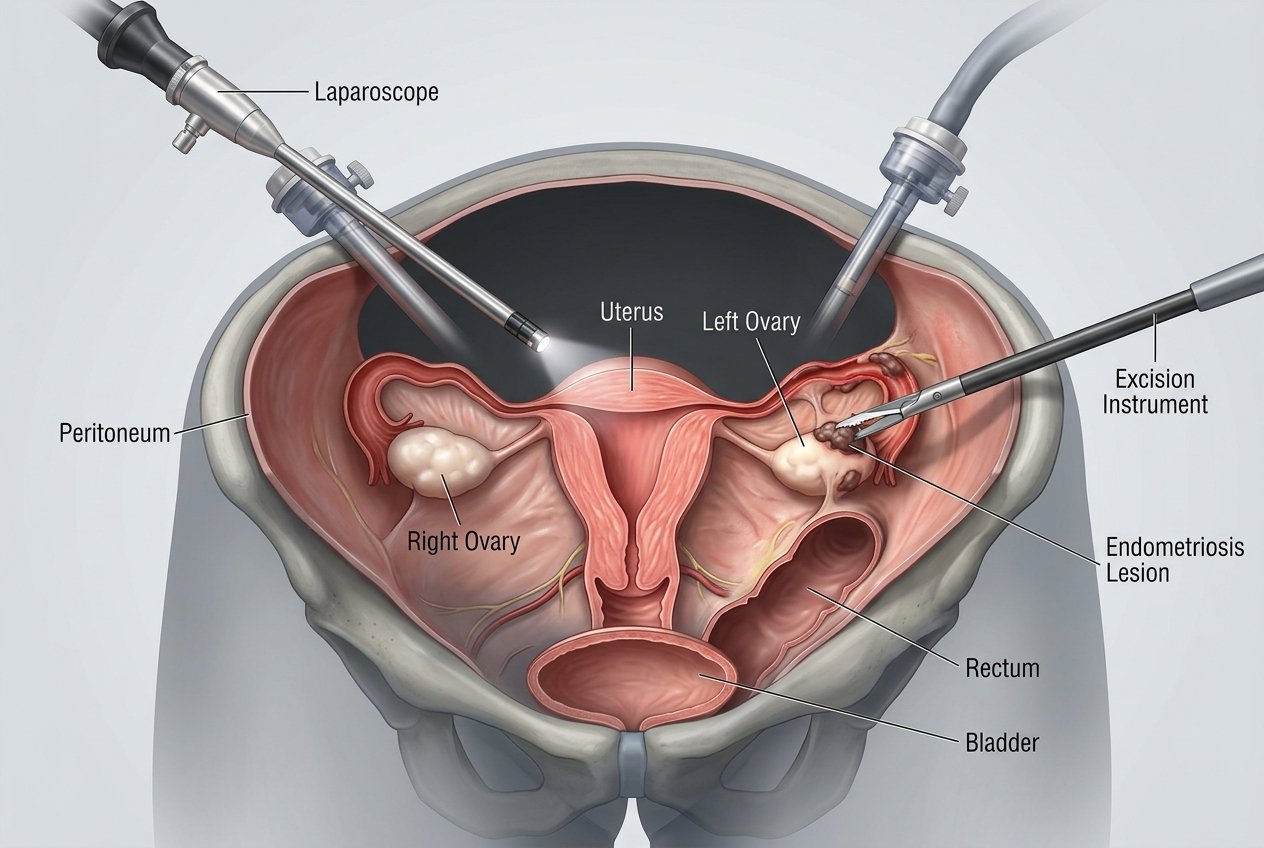
Endometriosis occurs when tissue similar to the lining of the uterus grows outside the uterine cavity. When these lesions penetrate greater than 5 mm beneath the peritoneal surface, it is termed Deep Infiltrating Endometriosis (DIE). These lesions commonly infiltrate the uterosacral ligaments, pouch of Douglas, rectovaginal septum, bladder, and bowel wall, forming firm fibrotic nodules.
Silent Symptoms Women Often Overlook
Many women in India suffer in silence for 7 to 10 years before receiving an accurate diagnosis. Watch out for these cardinal indicators:
- Dysmenorrhea: Severe menstrual cramps unresponsive to over-the-counter painkillers, leading to missed school or work.
- Deep Dyspareunia: Sharp or aching pain deep inside the pelvis during or after sexual intercourse.
- Dyschezia: Painful bowel movements, rectal cramping, or cyclical bleeding during menstrual cycles.
- Cyclical Urinary Distress: Frequency, urgency, or bladder spasms during periods.
- Unexplained Infertility: Inability to conceive naturally despite normal semen parameters and regular ovulation.
“Painful periods are not a woman’s destiny. When period pain causes you to alter your life, miss work, or rely on recurring pain injections, it is a medical symptom that demands specialized laparoscopic evaluation.”
Surgical Standard: Excision vs. Ablation
The international consensus among endometriosis specialists is clear: Ablation (burning the surface) is inadequate for deep disease because it leaves the active fibrotic core untouched, resulting in 40-60% pain recurrence within 12 months. In contrast, Laparoscopic Excision dissects the disease from the roots, releasing pelvic adhesions, untangling frozen pelvis anatomy, and restoring normal organ mobility.
| Feature | Superficial Ablation (Burning) | Complete Laparoscopic Excision |
|---|---|---|
| Nodule Eradication | Burns only 1-2 mm of surface | 100% removal down to healthy tissue |
| Pain Recurrence Rate | High (40% - 60% in 1-2 years) | Extremely Low (< 8% long-term) |
| Nerve Preservation | Risk of thermal nerve injury | Microsurgical nerve-sparing techniques |
| Fertility Impact | Leaves pelvic inflammation active | Restores pelvic anatomy for conception |
Frequently Asked Questions by Patients
About Dr. Sonu Singh
Dr. Sonu Singh is a Senior Consultant Gynaecologist and European-trained Minimal Access Surgeon in Lucknow with over 14+ years of clinical excellence. She completed advanced fellowships in Verona, Italy, and Bordeaux, France, specializing in nerve-sparing endometriosis excision, fertility preservation, and complex gynaecological laparoscopy.
Clinic: Gomti Nagar, Lucknow